Installation
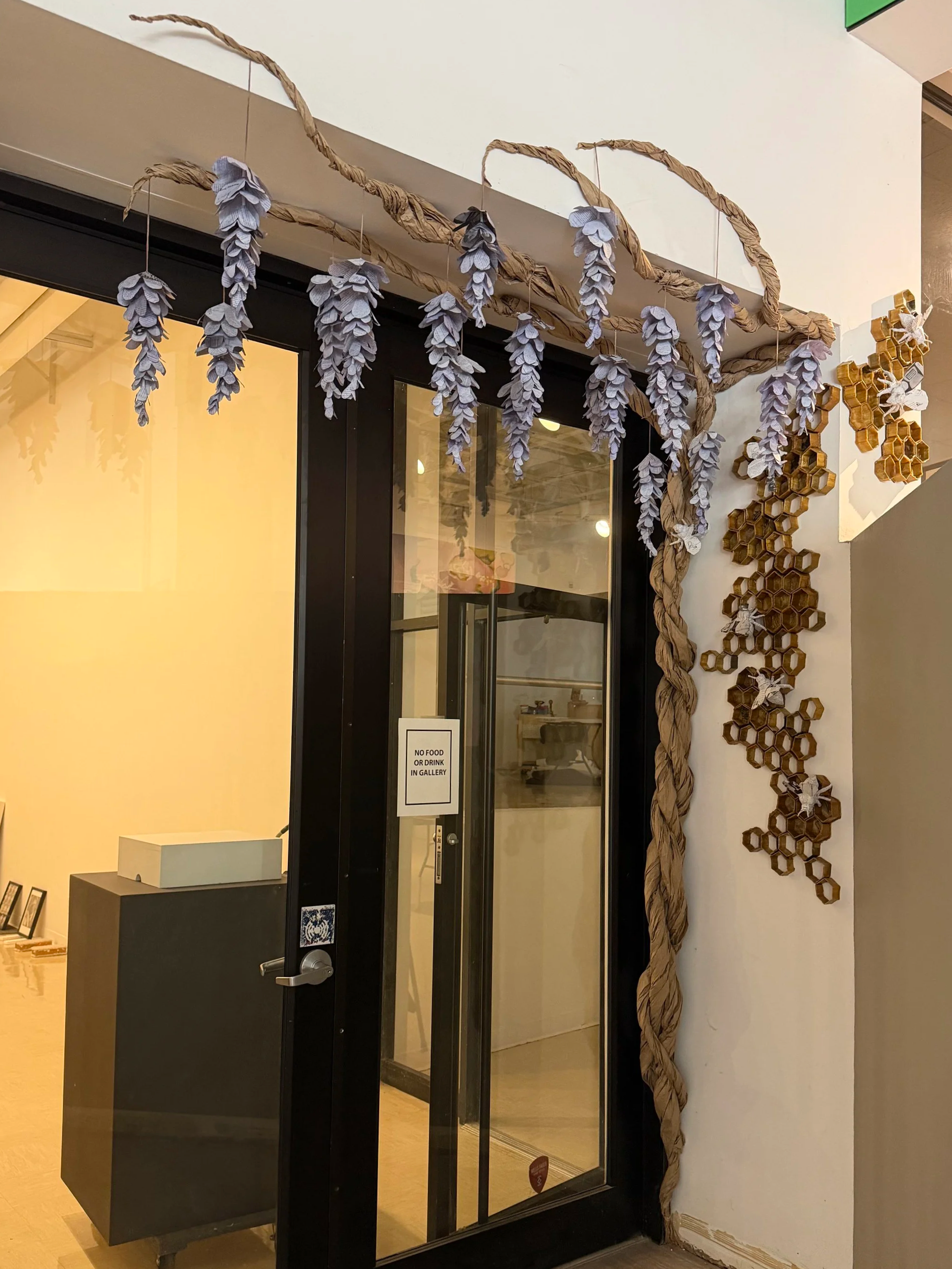
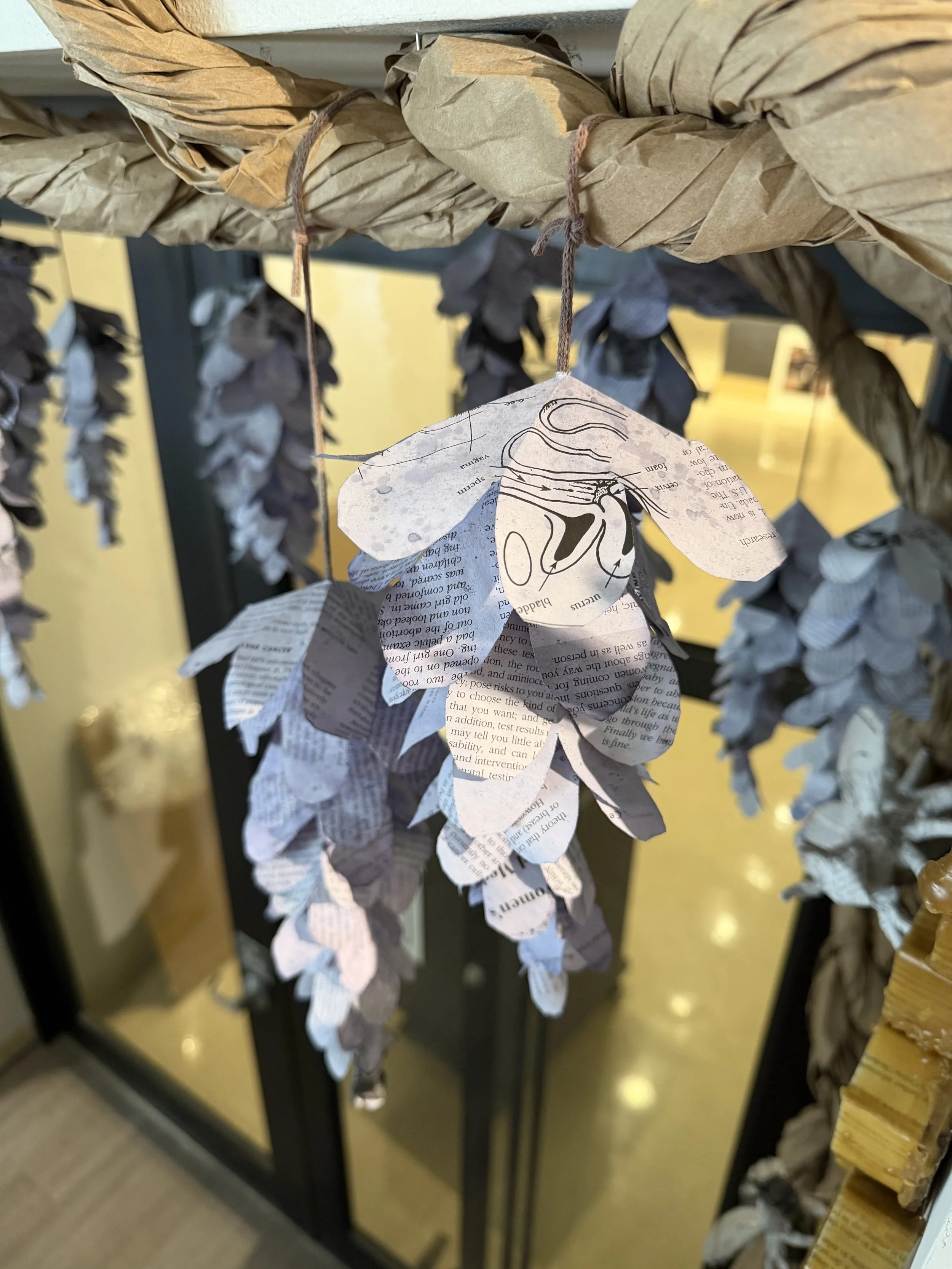
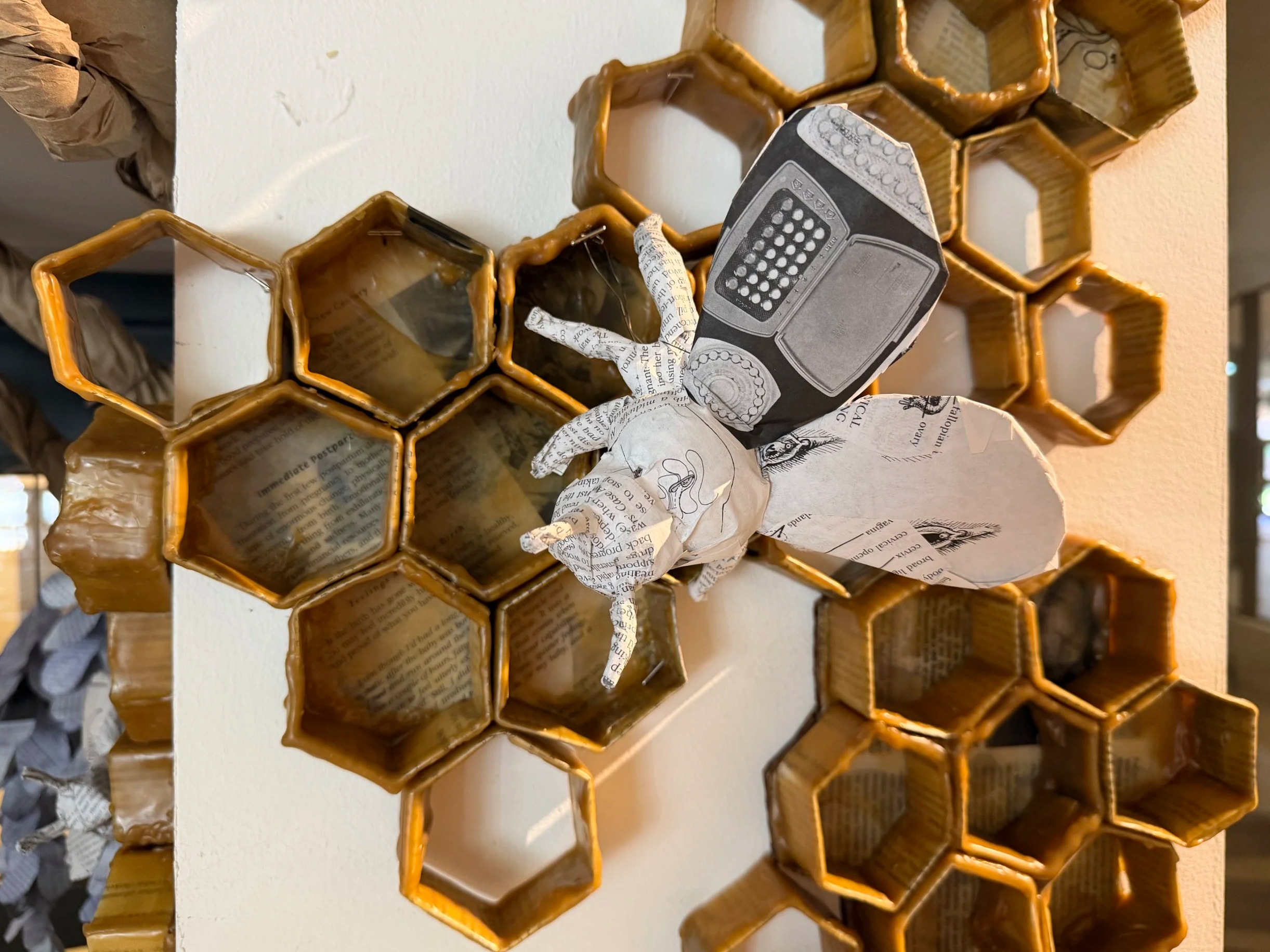
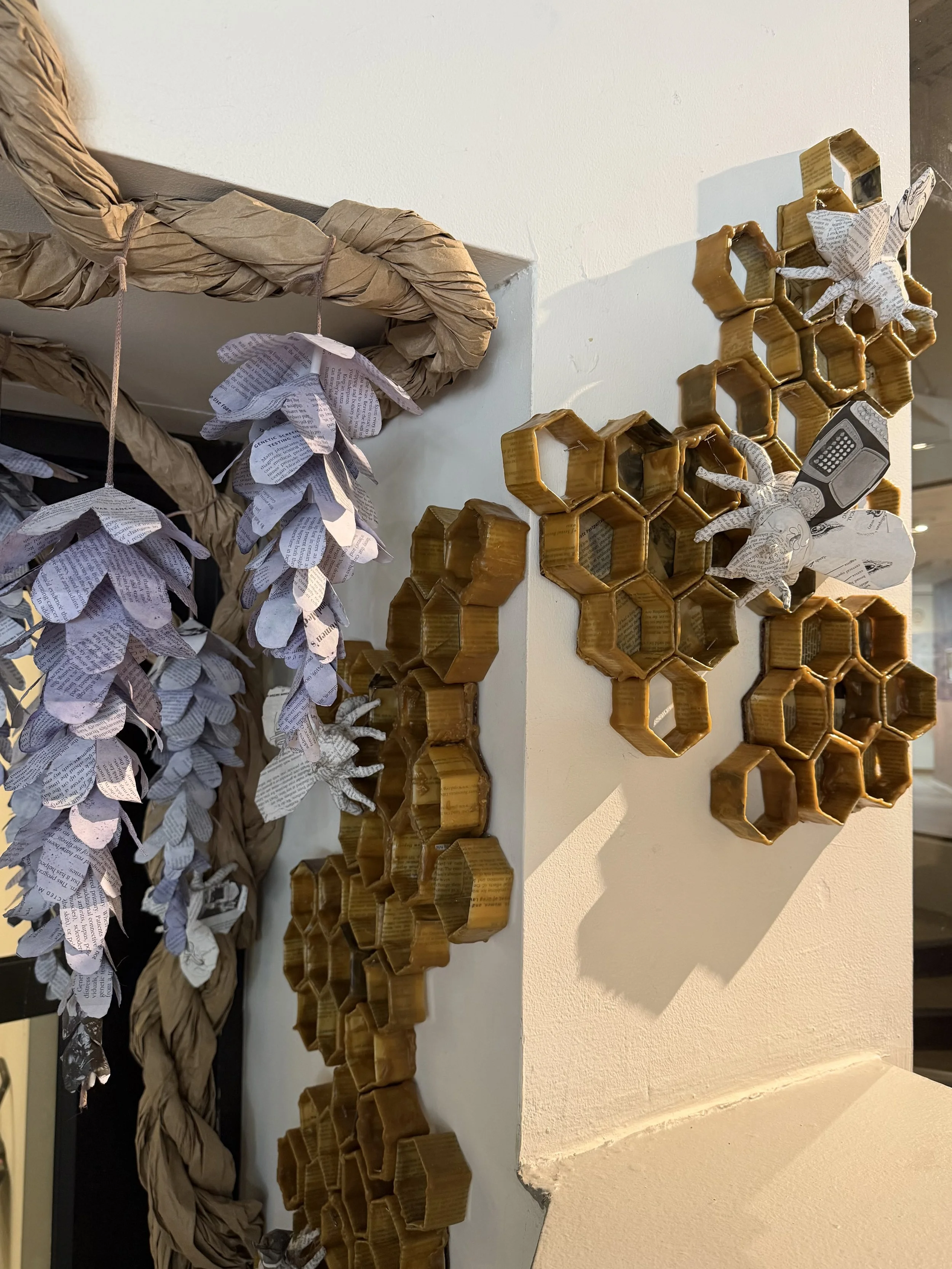
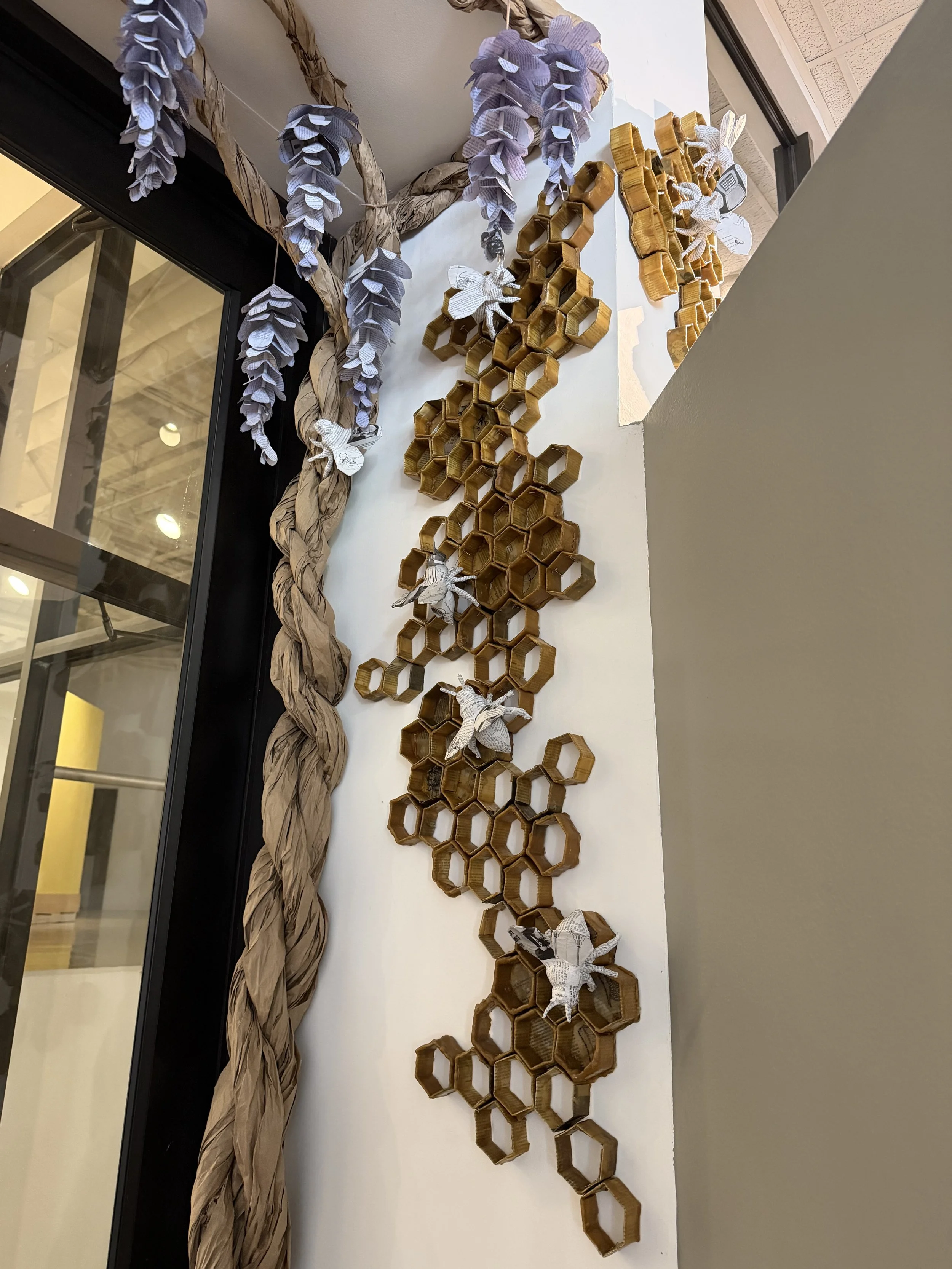
Our Bodies, Ourselves, 2025
115 × 110 × 30 inches
paper, natural dye from hibiscus and pea flower, wax, yarn,
This installation is inspired by Our Bodies, Ourselves for the New Century (1998), which is pretty much the definitive handbook on women's health and sexuality. I used the idea of a beehive and honeycomb to represent the power of women's communities, and the flowers to show our vitality and beauty.
I wanted the piece to really feel alive, so I built the honeycomb to climb up the alcove and wrap around the corner, hopefully making people want to walk around and explore it. Alongside it, I made wisteria-like vines out of brown craft paper that stretches up to the ceiling of the alcove, with flowers that sway a little when the air moves.
To make everything, I carefully chose and folded specific pages from the book to highlight different topics. The hexagons are dipped in wax, and I hand-dyed the flowers using hibiscus and butterfly pea flower powder. I pinned the honeycombs to the wall in a natural, flowing shape and attached 3D-printed bees covered in book pages on top, crawling and working on the hexagons.
When people first see it, I want them to just enjoy the soft colors and natural shapes. But when they step closer, I hope they start noticing the actual words and diagrams on the paper, letting them think a little deeper about the real subject here: women, our bodies, and our lives.
Environmental Response, 2025
110 × 215 × 190 inches
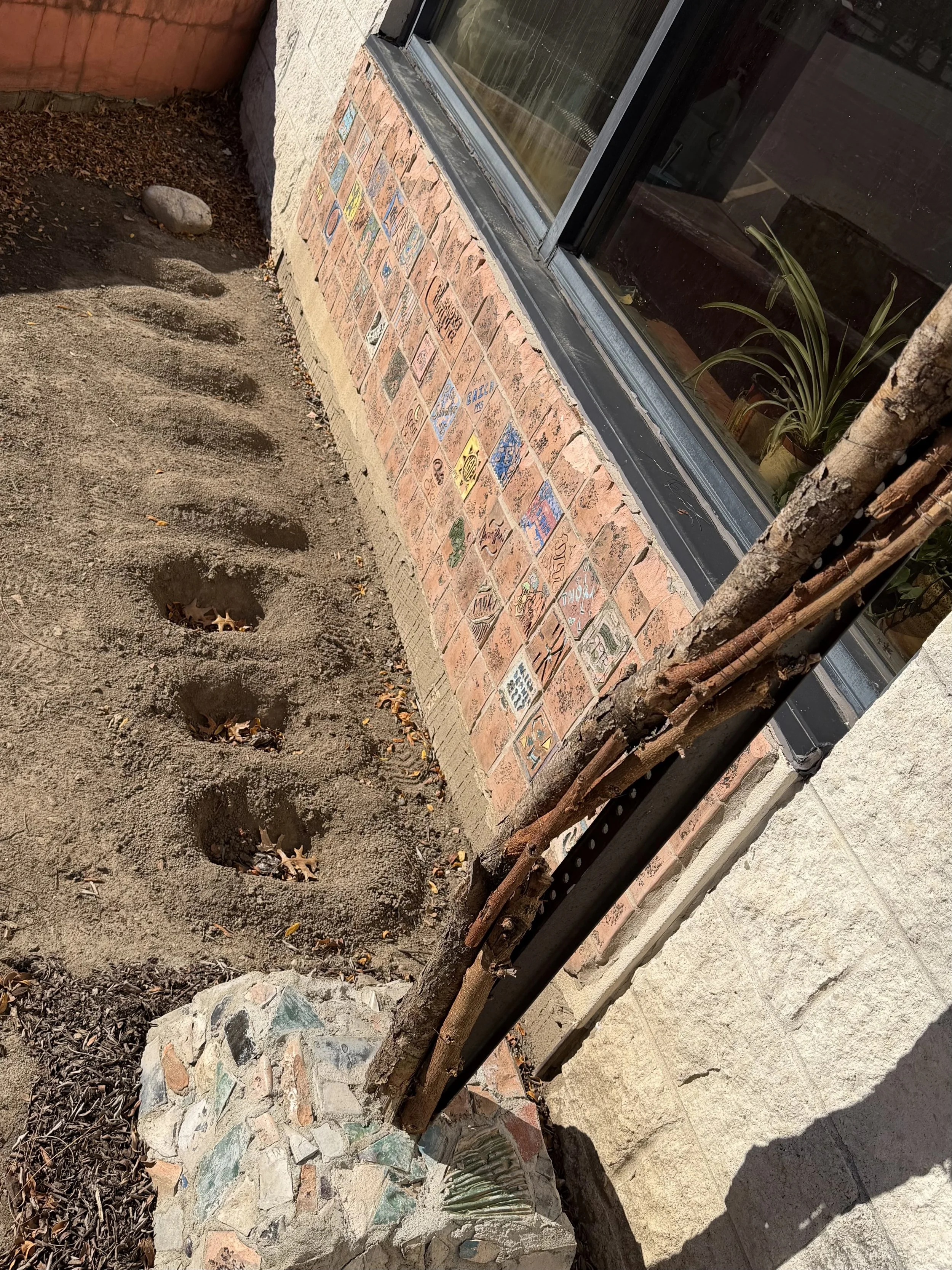
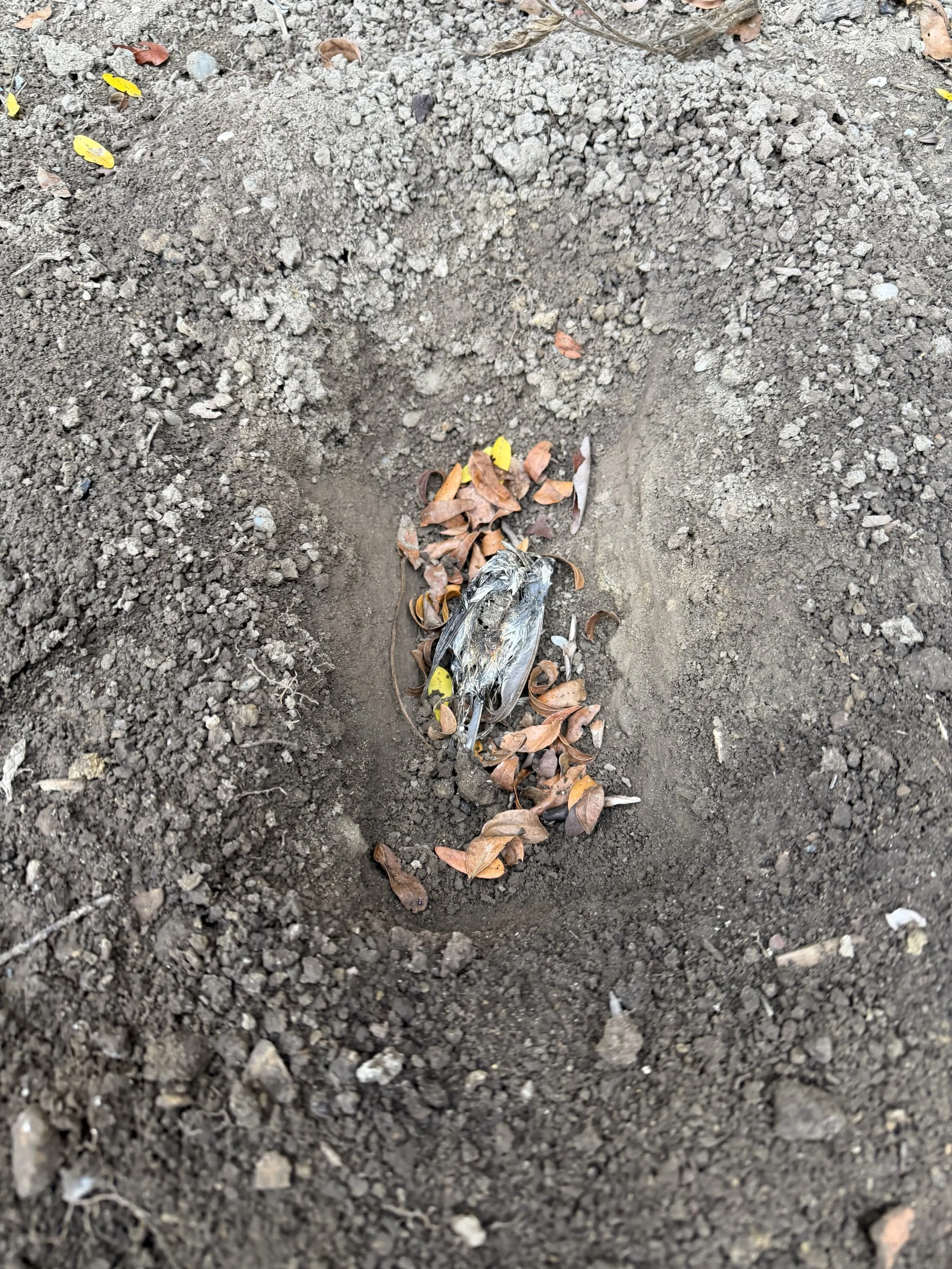
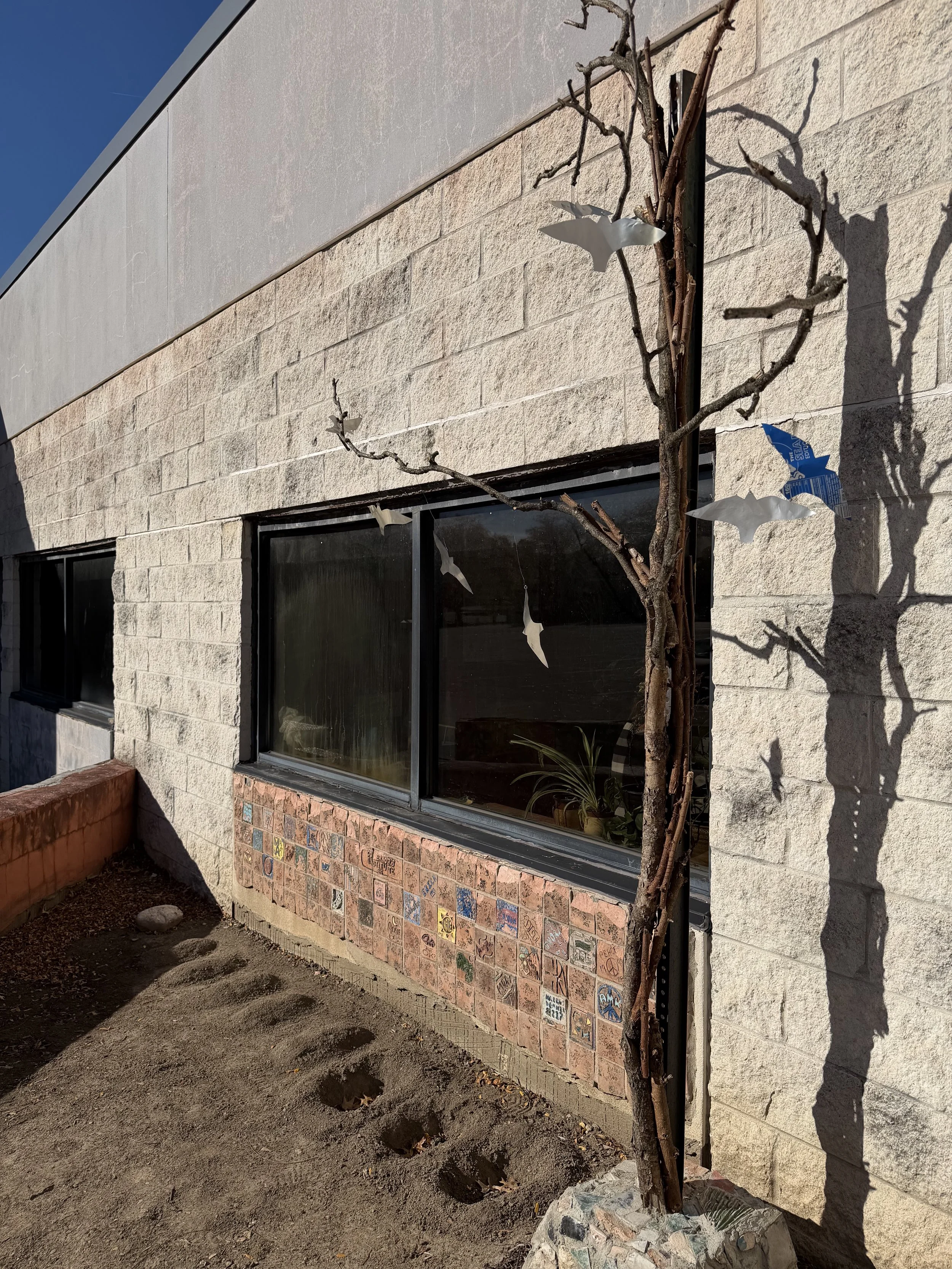
founds objects including: parking post, branches, broken ceramic tile (masonry grout), aluminum cans, mulch, dirt, dead birds
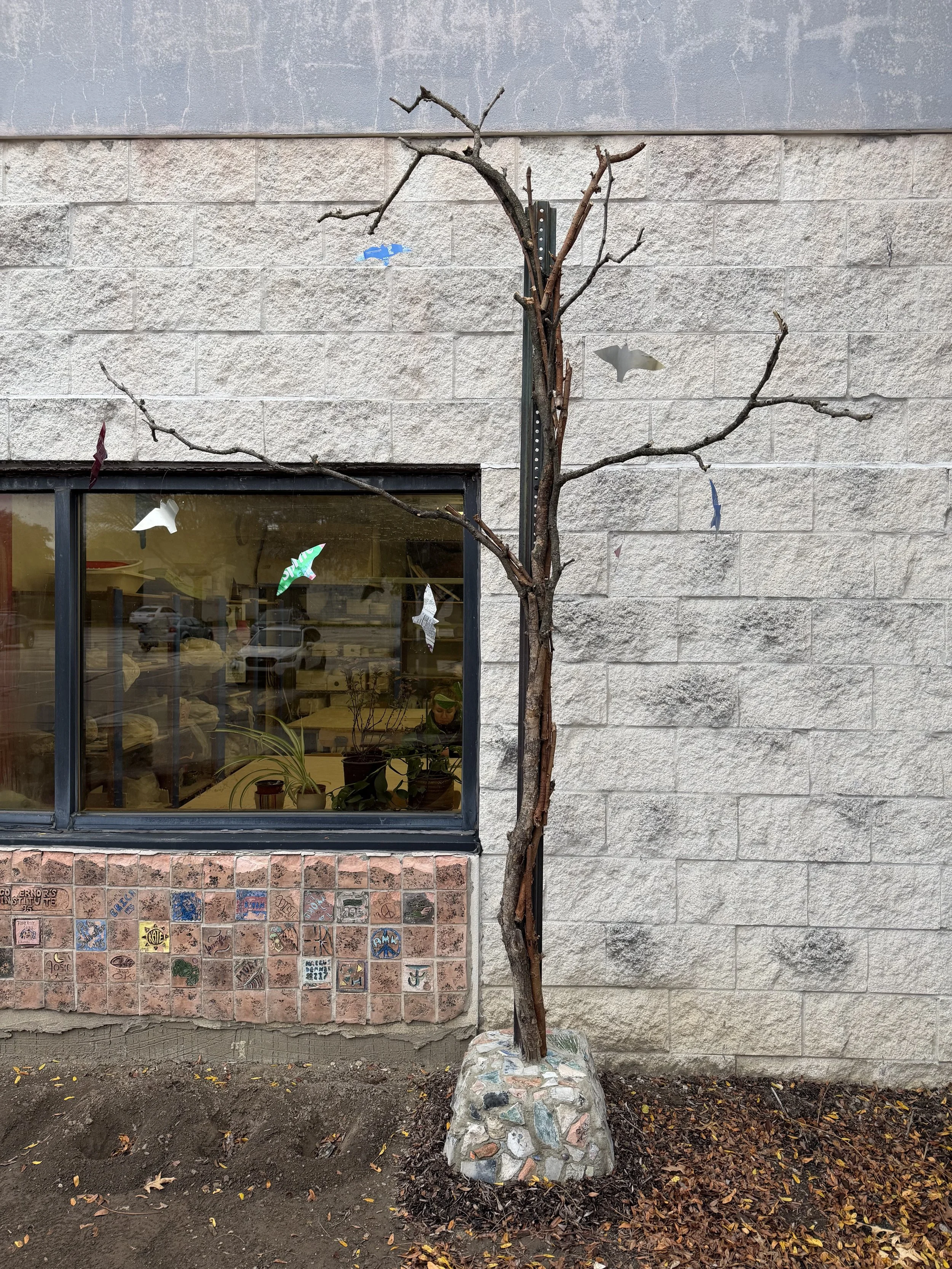
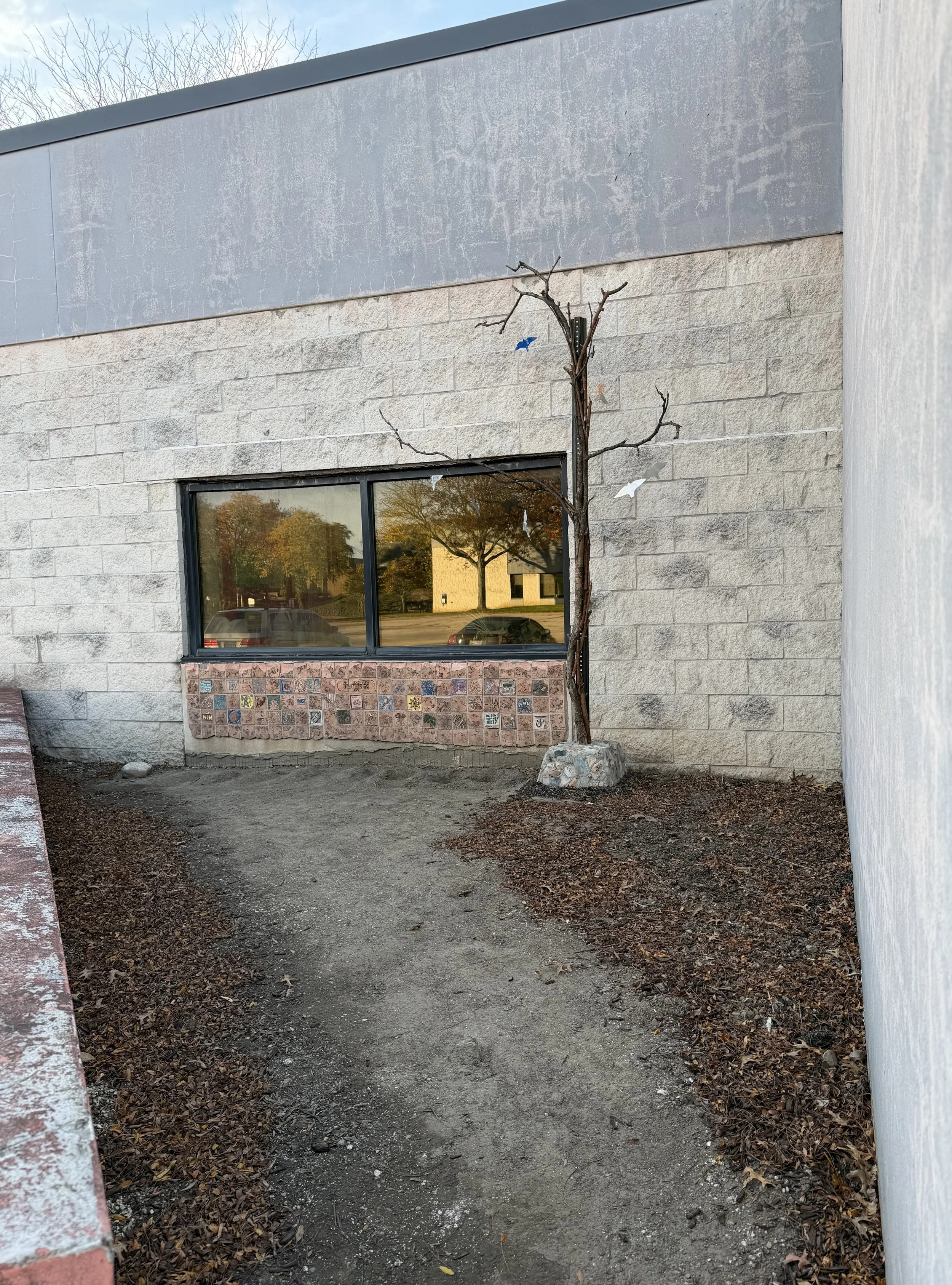
This project is a site-specific installation born directly from its location: a space marked by the tragic loss of birds that have flown into the building's reflective windows. My goal was to make the artwork feel like an intrinsic part of its surroundings, encouraging people to honestly confront the impact human structures have on local wildlife.
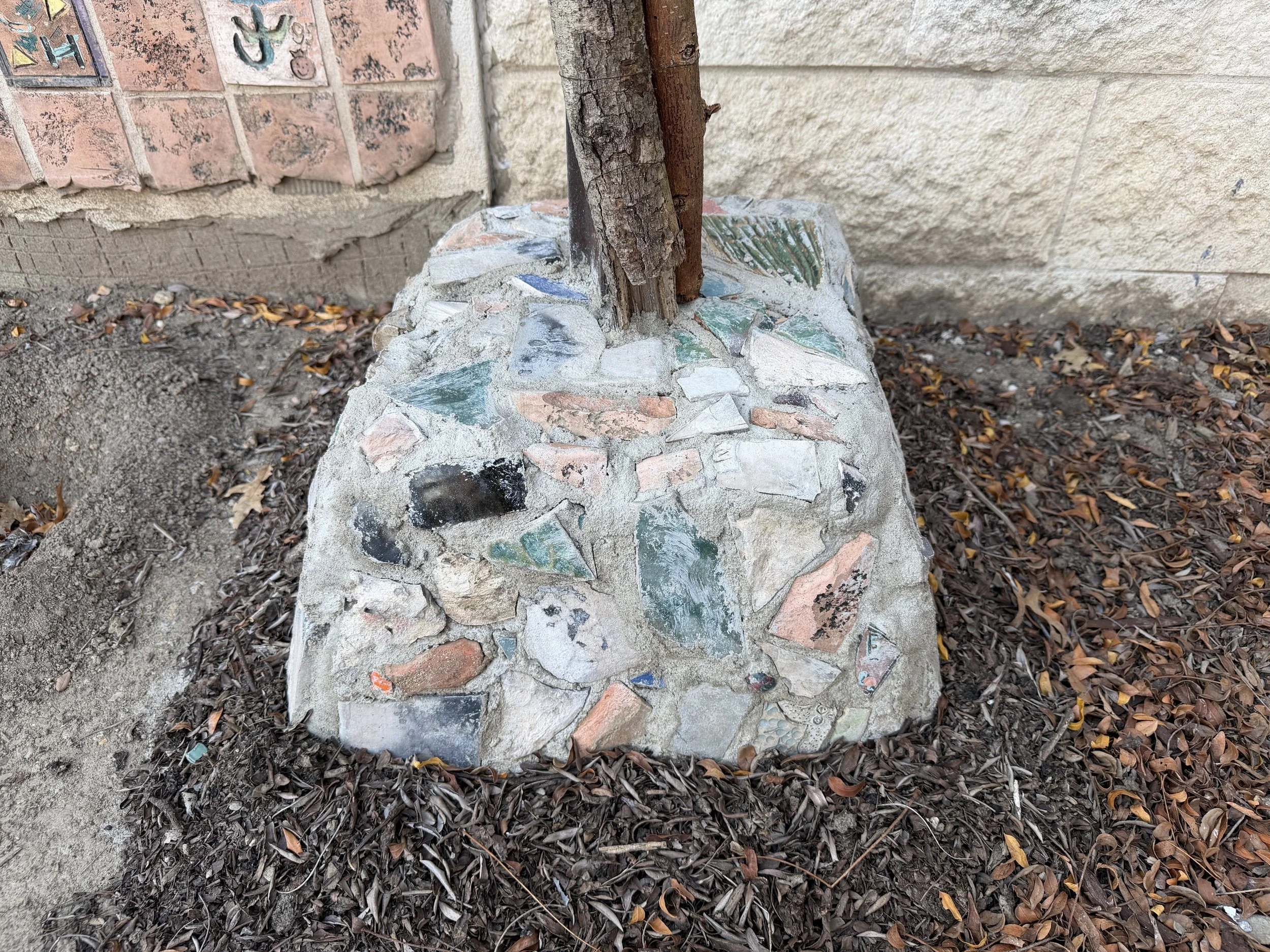
The heart of the work rests right beneath the dangerous windows at the birds' actual gravesites. Next to them stands the deterrent tree, a structure I built by combining industrial and organic salvaged materials, using an old metal sign pole and tree branches. It blends the manufactured and the natural, serving a dual purpose: it holds moving deterrents cut from discarded soda cans to keep birds away from the glass, while offering a safe, welcoming perch where they can actually land and rest. To tie everything together and ground the piece in the space, I grouted fragments of broken ceramic tile found onsite, around the base of the tree, blending the building’s own debris into the sculpture.
By using localized, repurposed materials, the installation creates a space for quiet reflection. Ultimately, it asks viewers to consider our environmental footprint and invites us to make tangible, lasting changes in how we coexist with nature.
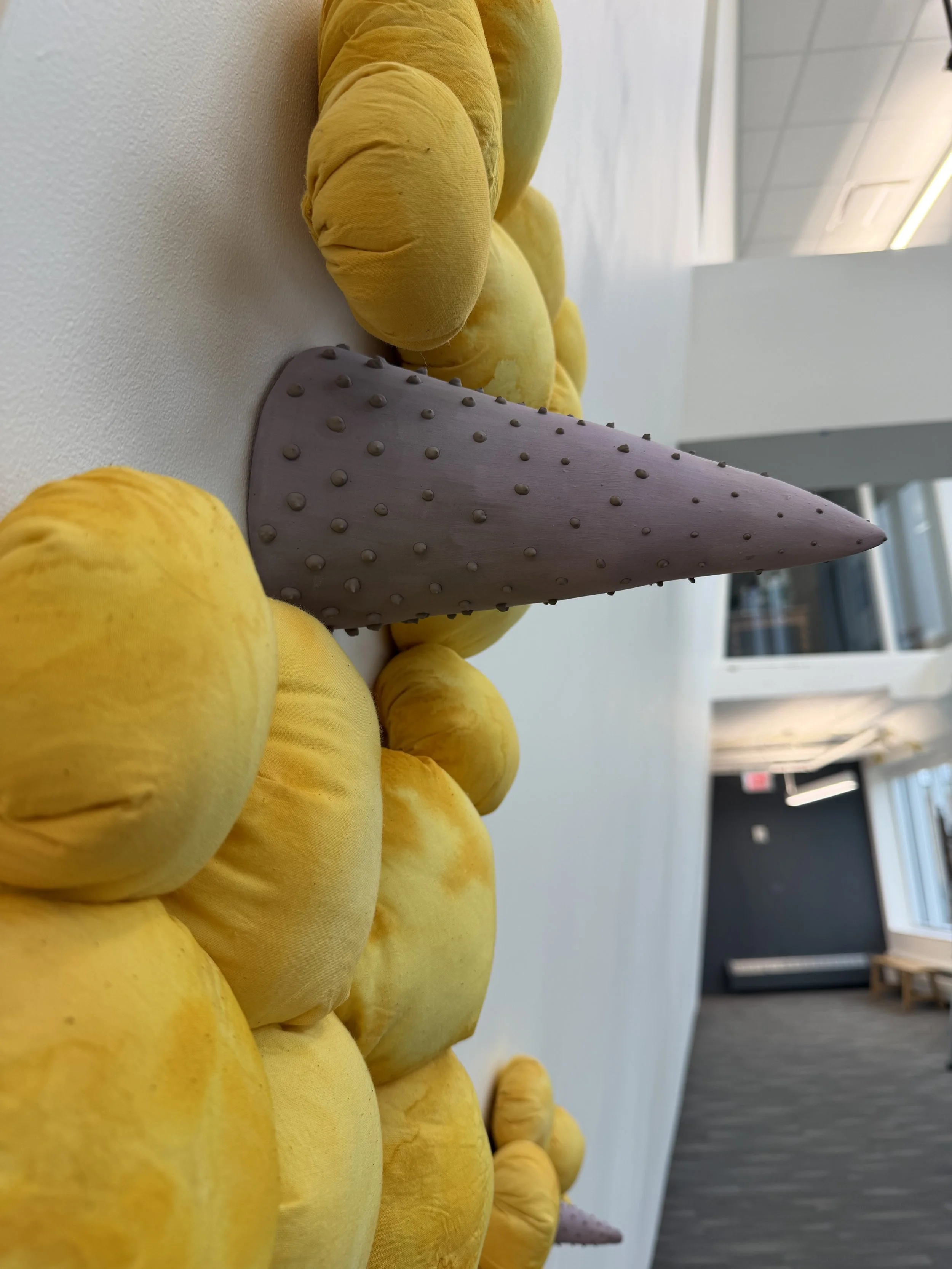
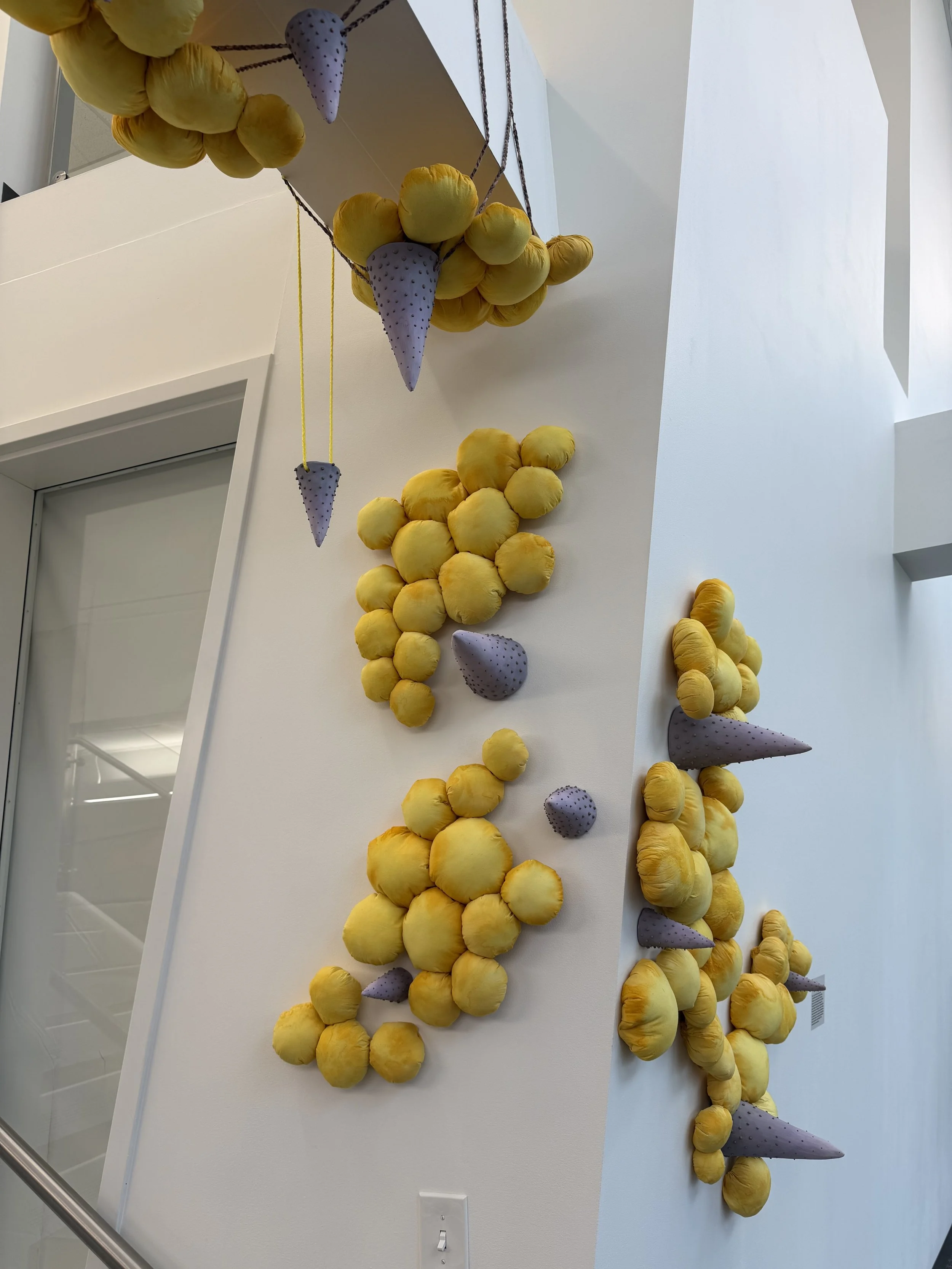
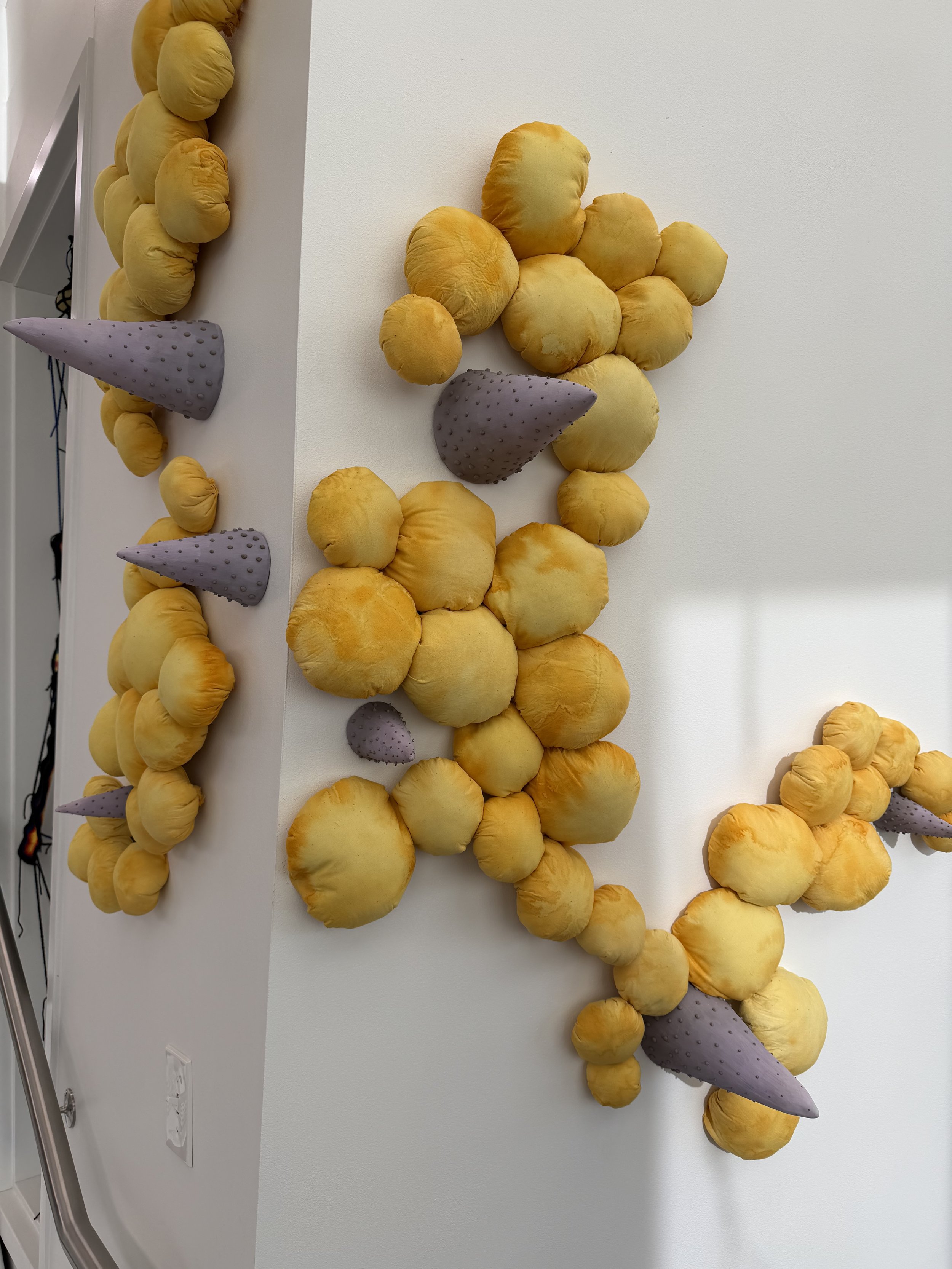
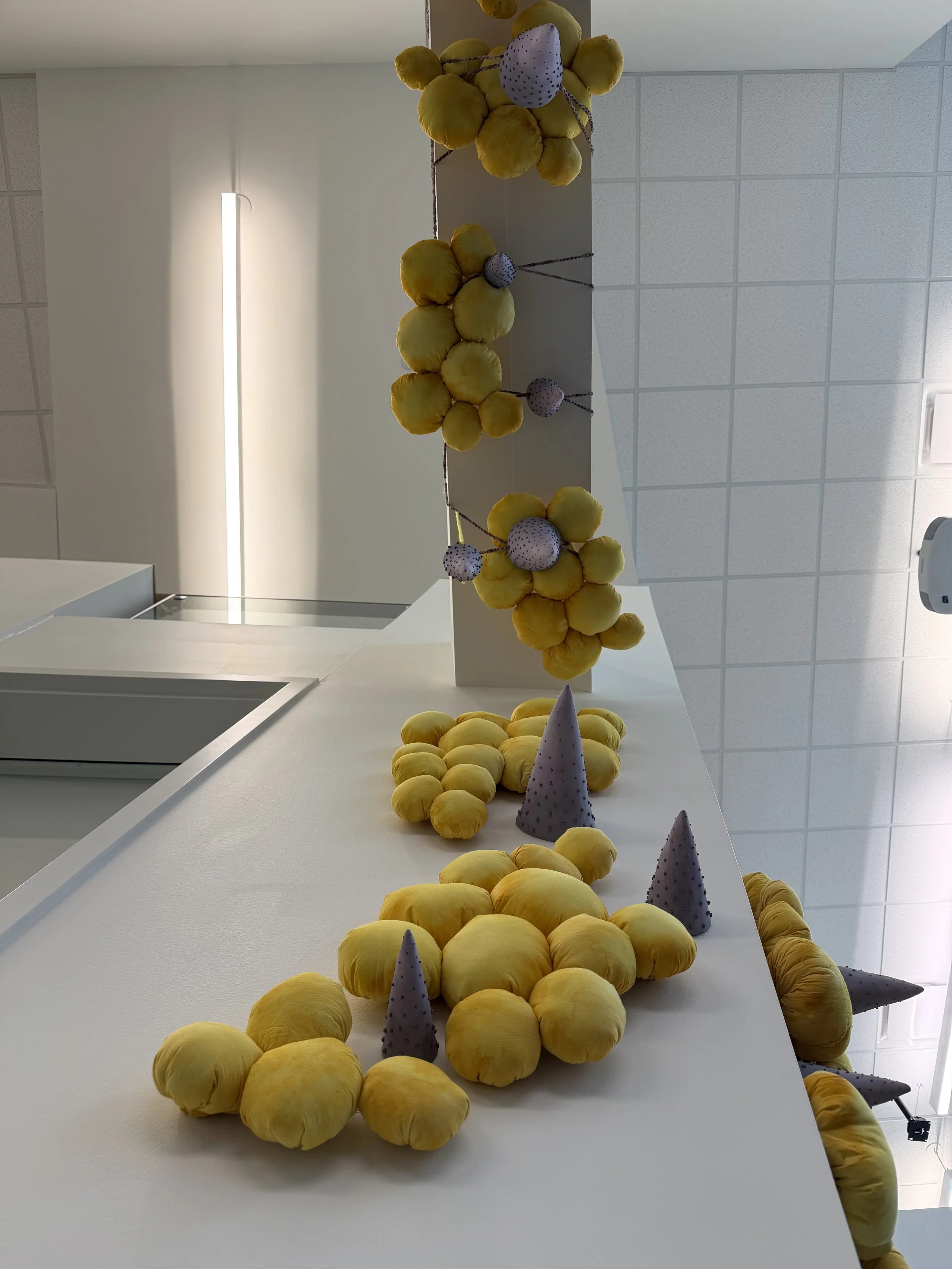
Synaesthetic: Do You Feel What I Feel, 2025
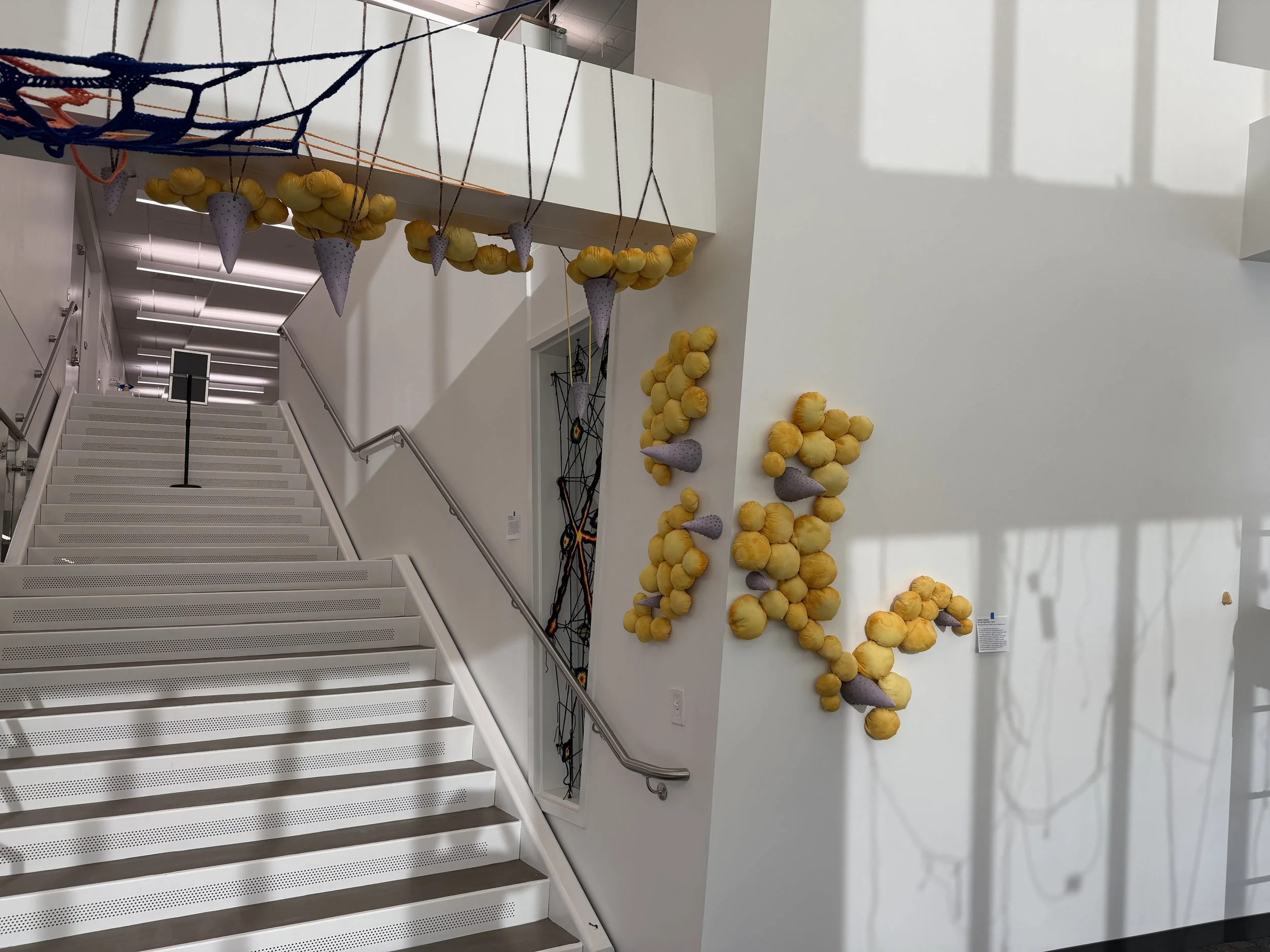
72 × 108 × 12 inches
fabric, poly fill, dye, ceramic, slip, underglaze, yarn
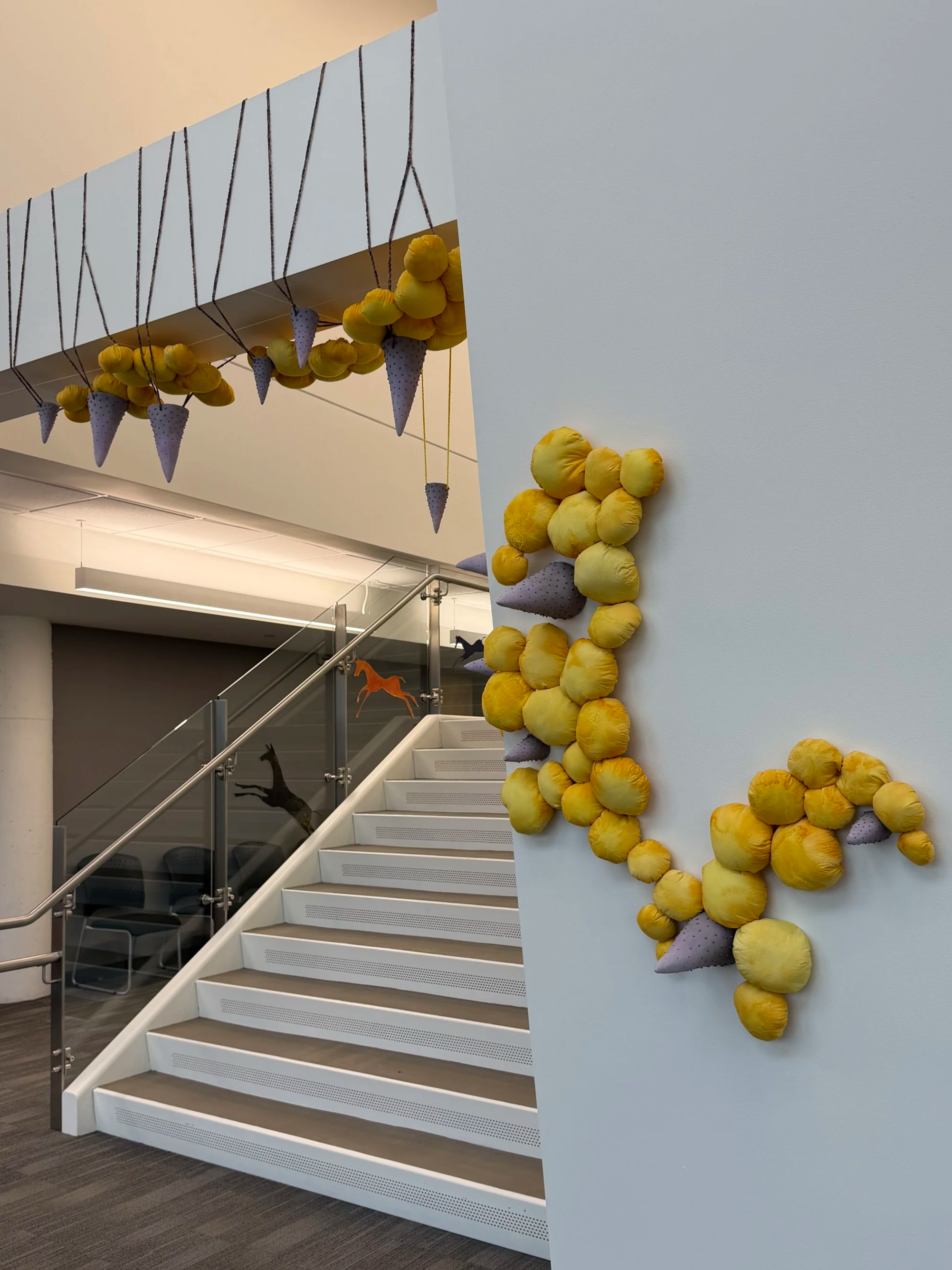
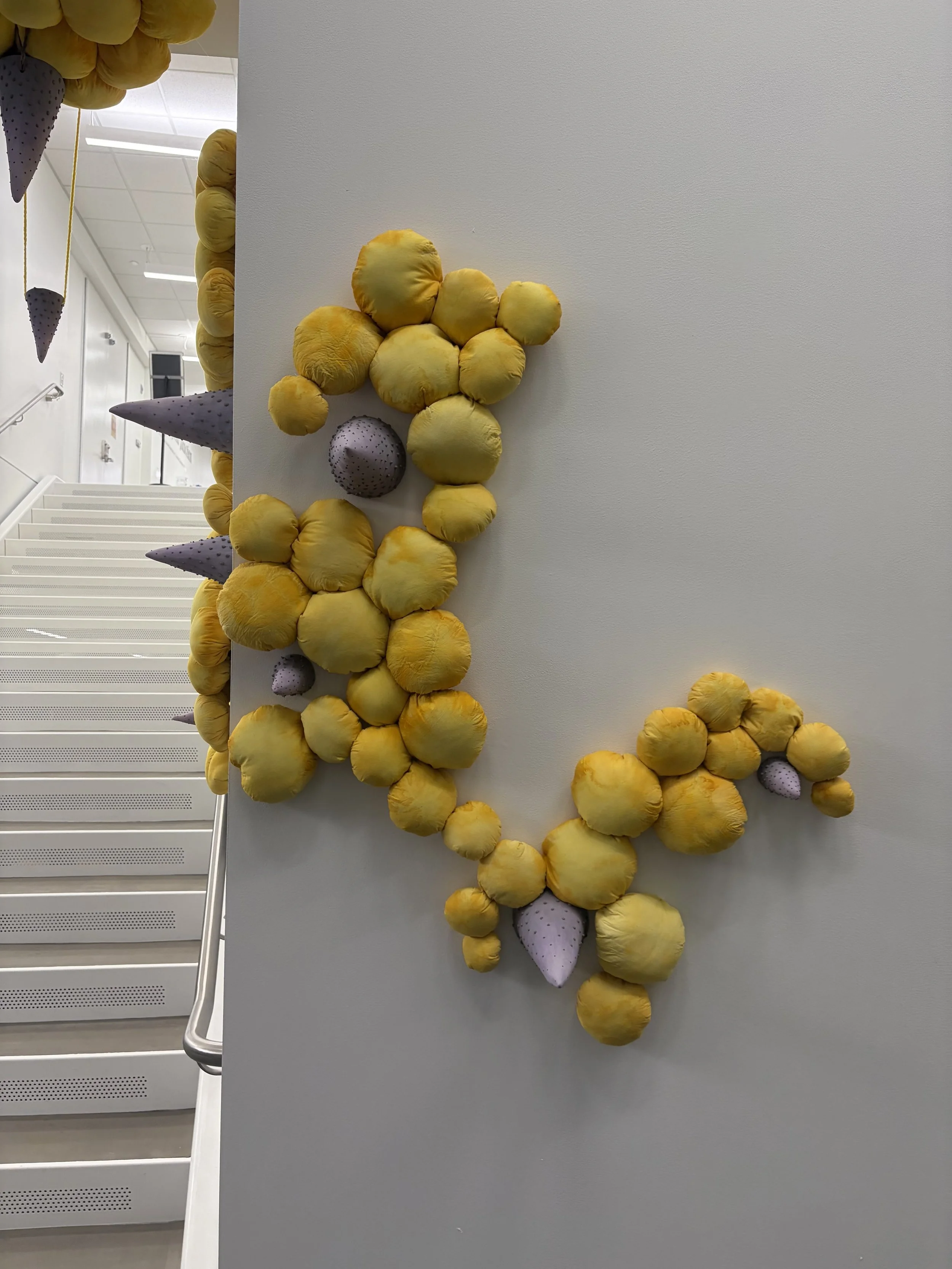
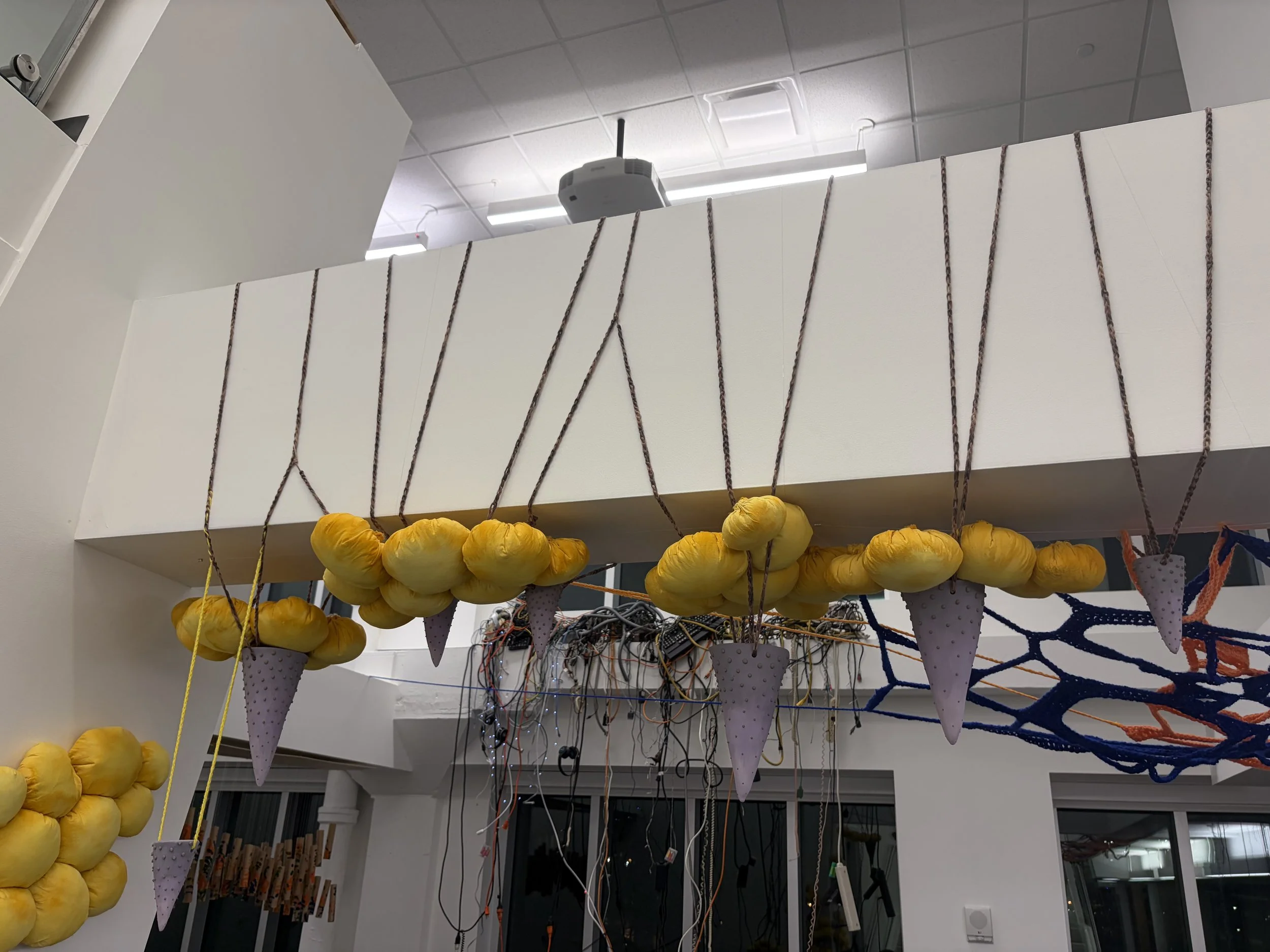
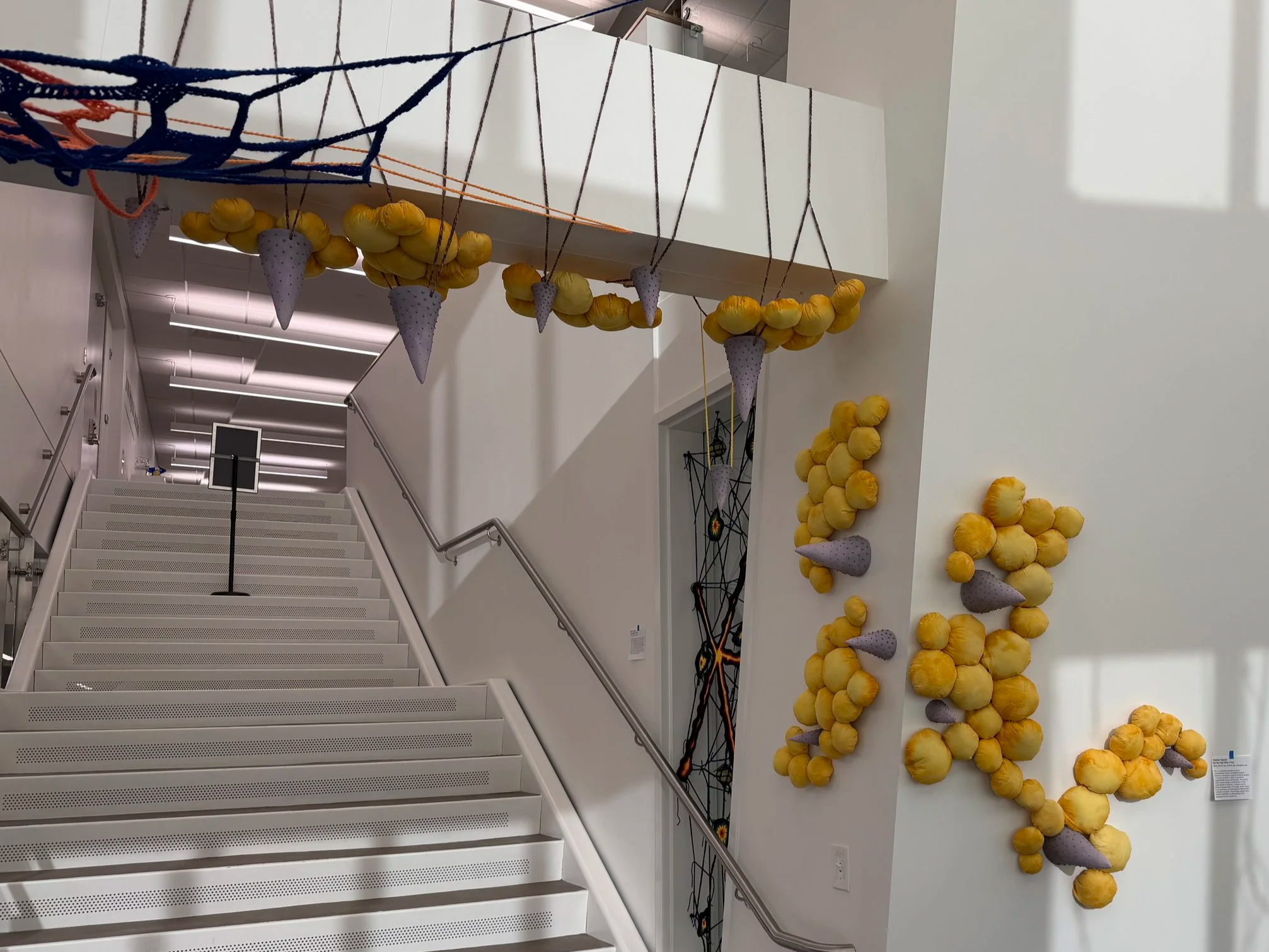
Pain is a universal experience, yet its understanding remains completely relative. I believe no one person's pain is inherently greater or less than another's; rather, it should be regarded with equity and empathy. This project seeks to foster deeper consideration for the disparate nature of suffering. I created a tactile, abstract representation of my pain, which serves as an instrument to communicate a feeling often confined to isolation, thus inviting viewers into a shared, empathetic understanding of this ubiquitous human experience.